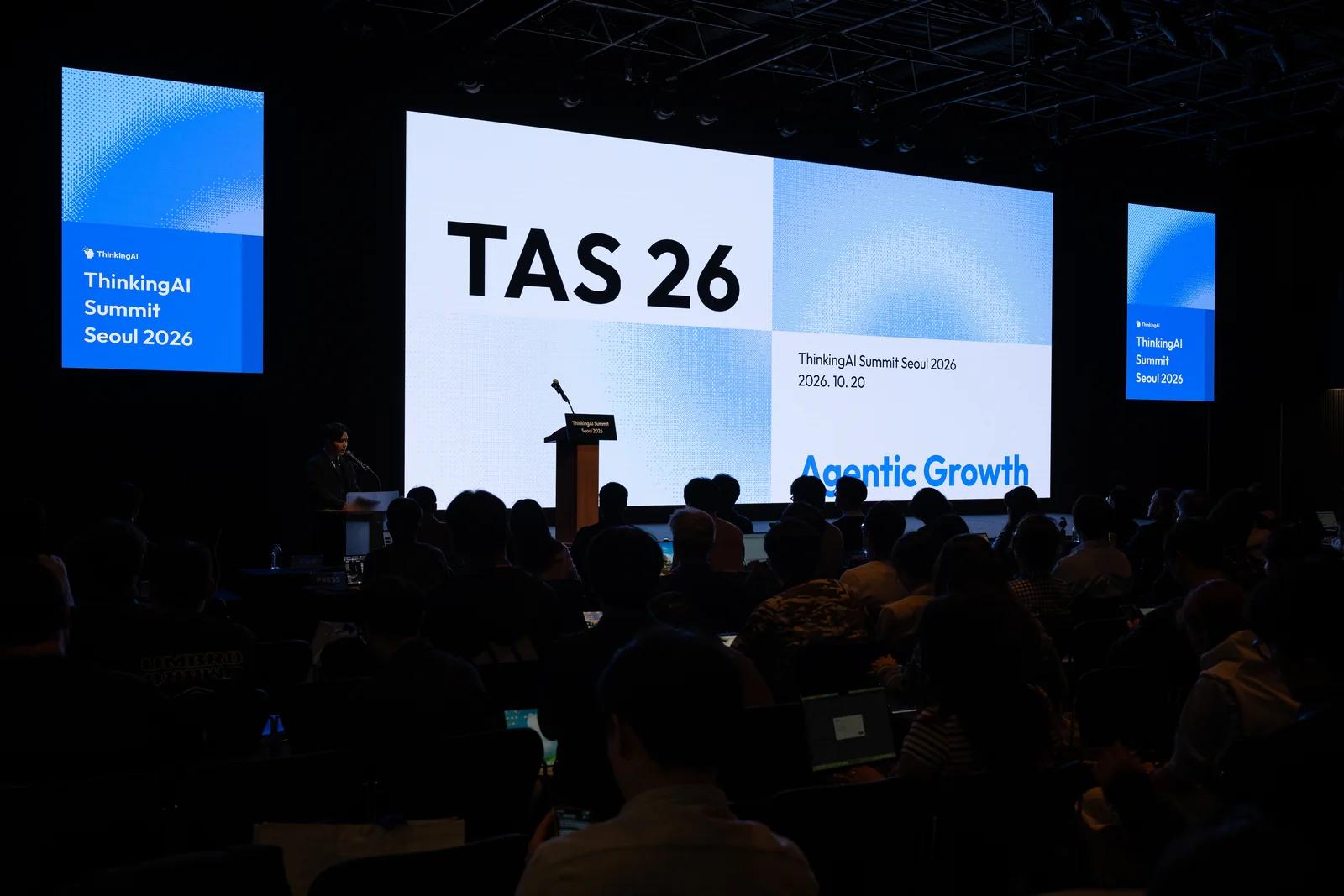
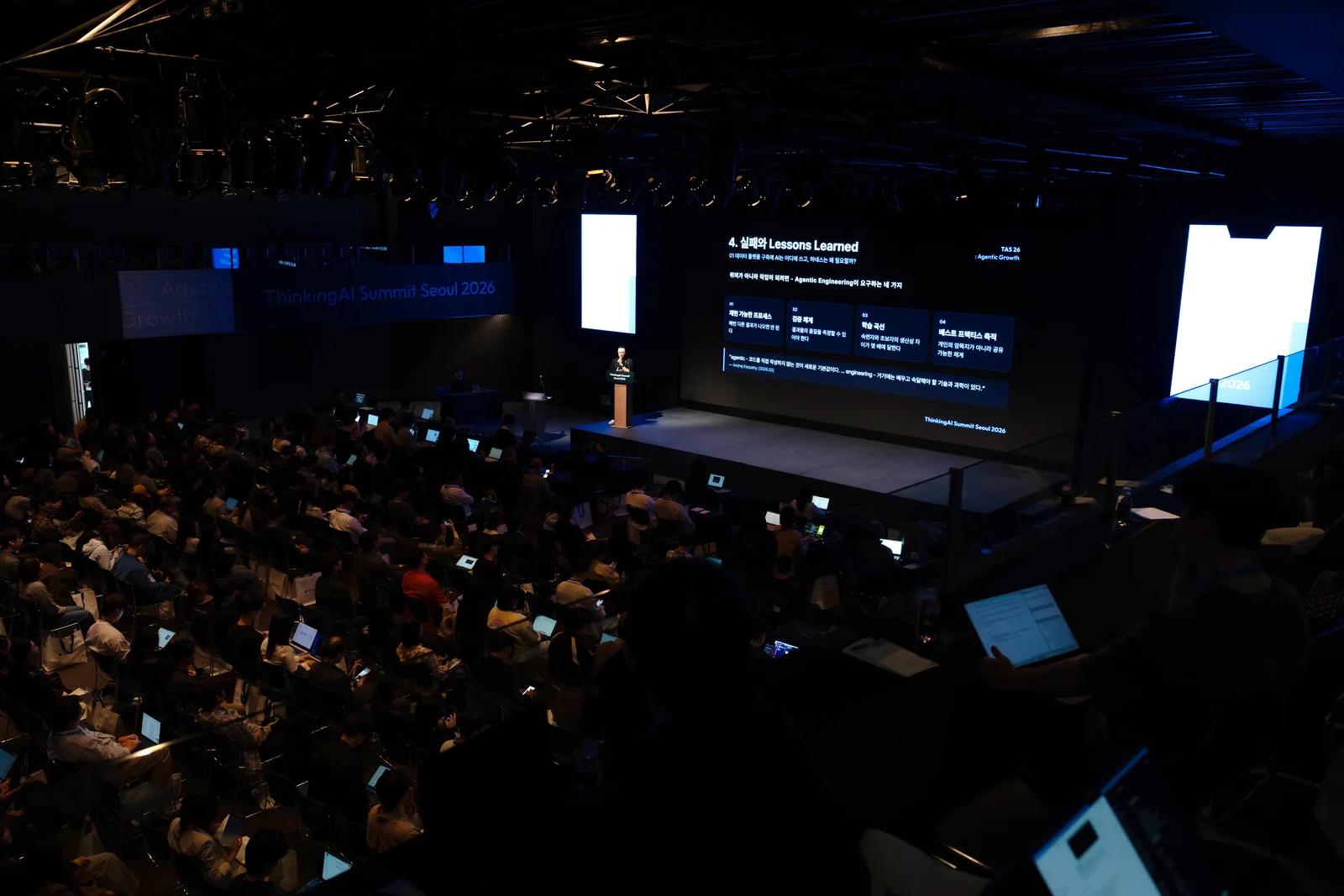
At ThinkingAI Summit Seoul 2026 (TAS 26), which we hosted in Gangnam on October 20, speakers from Next Securities, Underdox, Class101, Bluehole Studio and our own team argued that AI has sharply cut the time individual tasks take, while the hand-offs between people still set the pace of growth.
Our Country Manager for ThinkingAI Korea opened by asking how many things a team built with AI in the past year still run every day. Most customers answer "one or two," according to the Korea team's recap. The Country Manager also cited two studies on stage. In McKinsey's survey, 8 in 10 respondents said AI had raised their personal productivity, while the share of companies reporting any contribution to operating profit stayed at 37%, unchanged from a year earlier. MIT NANDA found that 95% of enterprise generative AI pilots had no measurable effect on profit and loss.
The tasks got faster
New updates went from 20 days to a few days. Analysis that took nine organizations one to two weeks now takes one or two people in a day. Pre-checks for an A/B test fell from two to three hours to 15 minutes. At Bluehole Studio, SeungHyun Lee's Seed team builds a playable version with an agent before writing documents, and adding a new weapon went from 20 days to one. At Class101, Product Strategy Lead Gilwoo Ha said the time to learn something from a test fell from three days to one.
The time between people did not shrink
Three kinds of time did not get shorter. People still spend it explaining work and getting approval, deciding to try something and checking the numbers AI produces. Lee said six of the eight steps to build one feature at Bluehole had gone to documents, reviews and re-approval. Ha warned that a team can split when each person asks AI separately. If each answer is 75% accurate, the chance that ten people all get a right answer is about 6%.
Our Country Manager traced the gap to three bottlenecks. Running AI day to day needs data definitions, permissions, links to existing systems and a person accountable for the result. The meaning of the data and the business context have to survive a change of model or of the person responsible. And someone has to measure what changed and feed it into the next action.
Teams that built context first handed agents more work
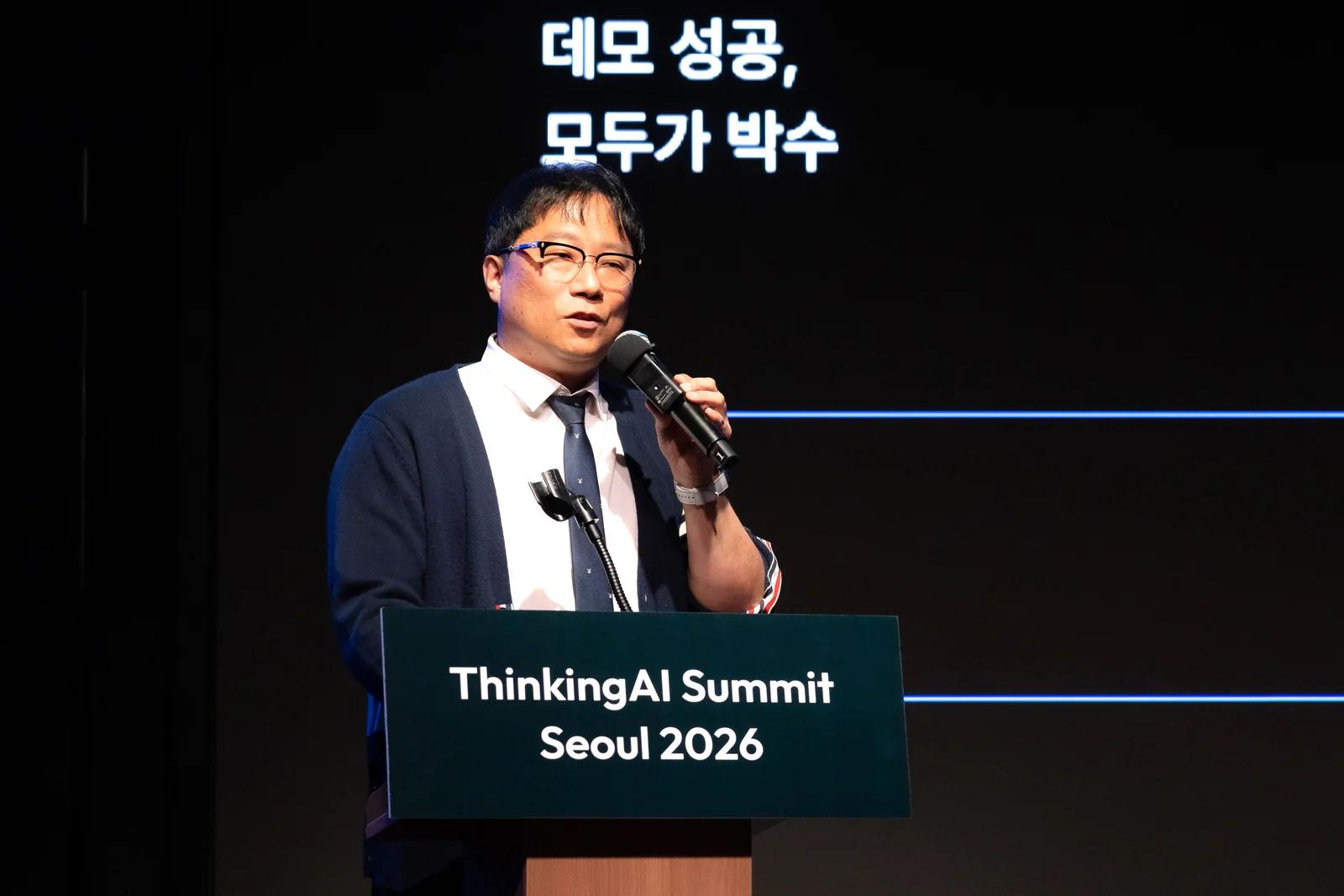
The teams that handed agents more work had built that structure first. At Next Securities, Dongjin Seo, the team's only data engineer on joining, keeps decision records, intent specs and lessons learned in one master repo that agents load before they start, and automated checks catch rule violations. Underdox, a six-person studio with no data engineer or analyst, has an agent query its game logs in ThinkingAI. When a server's top-paying player left, the agent analyzed the case and seven other high spenders, a separate verification agent ruled out other causes, and the team confirmed an improvement plan three days after the attack. People review and merge what the development agent builds.
We see growth as a loop, in which a team reads the data, finds a problem, runs an experiment and carries what it learned into the next move. Our Sales Director showed an agent working that loop on 380 customers who had left items in their carts, grouping them by price concerns and low-rated reviews and proposing a campaign for each group for people to approve.
People still decide what to hand over
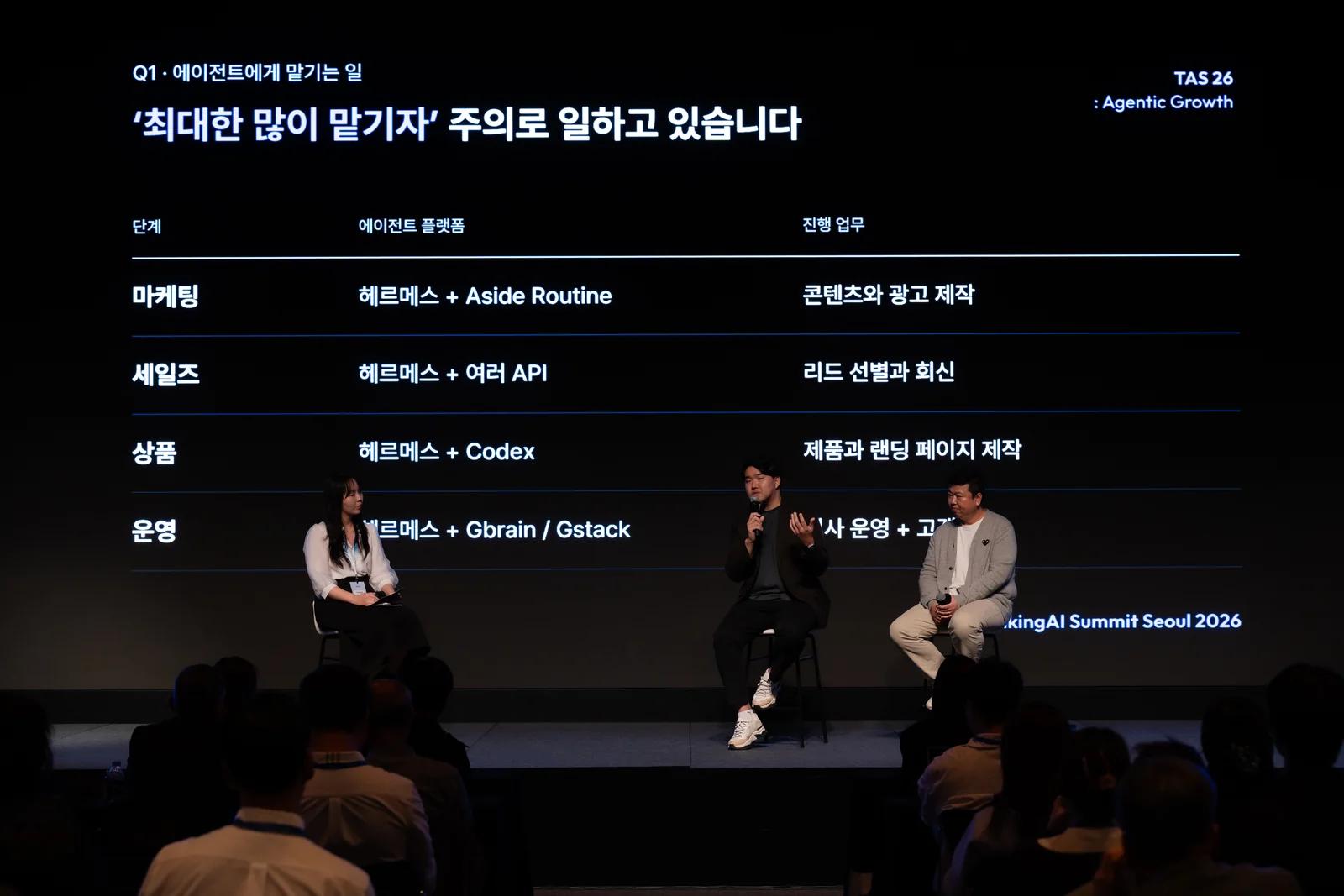
In the closing conversation, Juneyoung Jeon of Nexus (ONE platform) and Josh Kim of JOSHUA&COMPANY described their work after handing tasks to agents. Jeon still presses the final button on what a personal AI team prepares. Kim runs 11 loop agents every day, and people step in to choose the material and to review after publication. Jeon said the saved time filled up with other work, and Kim said the work and the revenue both grew. For teams starting out, Kim's advice was "Start with records," as the Korea team's recap reports.
More from each session is in the Korea team's recap (in Korean). We expect the next gains to come from the hand-offs, from context that outlasts a change of people and from one loop that runs from analysis to execution with people deciding.
Share