New book · ThinkingAI Press · 2026
How one company rebuilt itself around AI
Once machines can do the work, organizations must run on a new, continuously revised coordination mechanism, not faster tools.
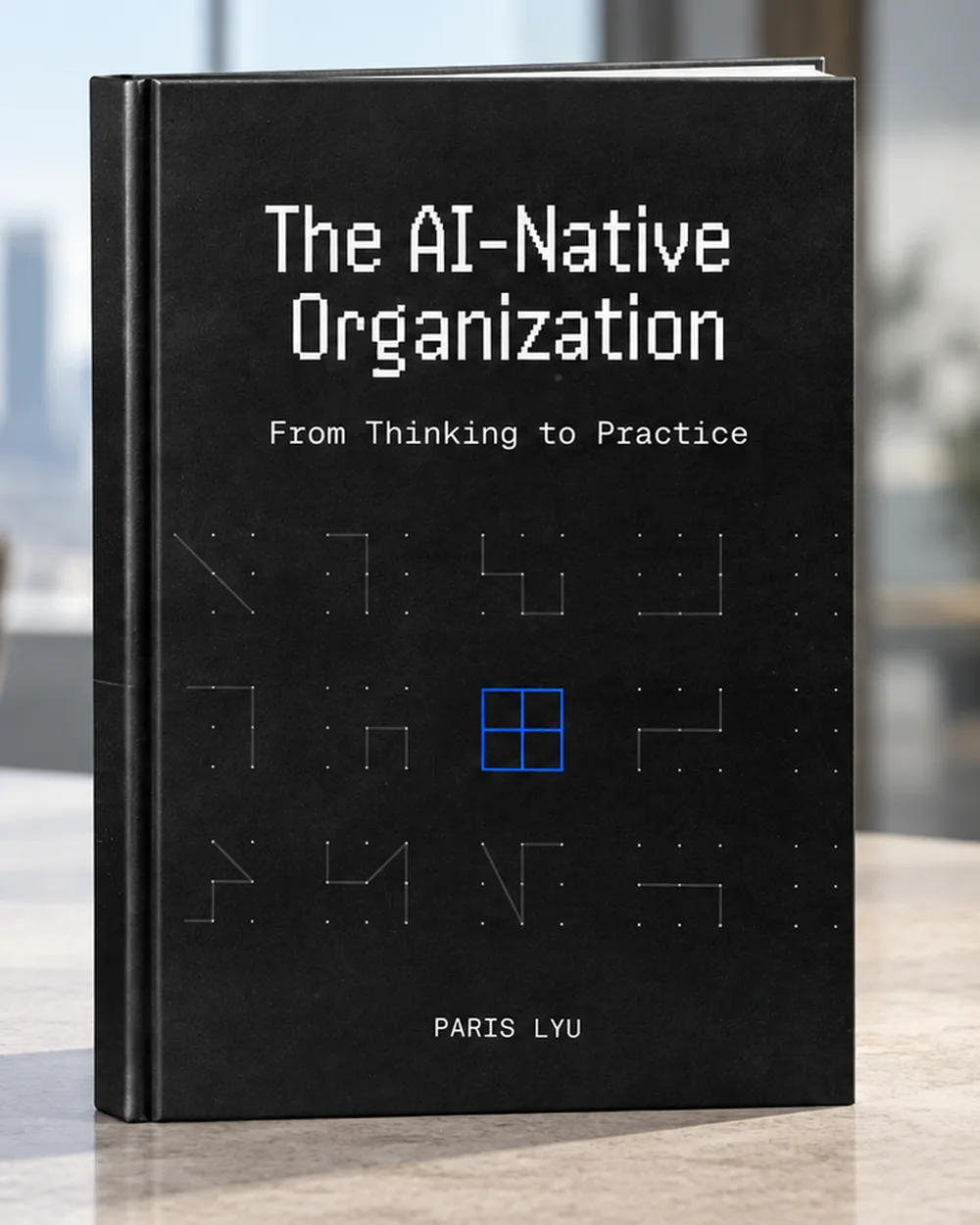
Paris Lyu founded ThinkingAI and ran its year-long rebuild for an age when AI does the work. This 13-chapter field record, in three parts, shows how it happened, including where it broke.
About the book
A third way to coordinate work
For a hundred years, organizations have coordinated work by two real methods: people adjusting to each other in real time, which cannot scale past a room, and standardization, which trades quality and speed for reach.
The AI-Native Organization argues that generative AI opens a third path. Paris Lyu calls it the seventh coordination mechanism, semantic coordination: decision context that once lived in scattered heads and slow-moving culture is codified into a shared, machine-readable layer, carried out by agents empowered to act, and continuously revised by what fails.
The book's question is blunt: when machines can do the work, how should an organization grow anew? Its answer is organizational rather than technological. What gets written down, what gets delegated and to what depth, which layers of management survive, and what is left, irreducibly, for people to decide. It is reported chapter by chapter, from the year the author spent taking his own company apart to find out.
- Author
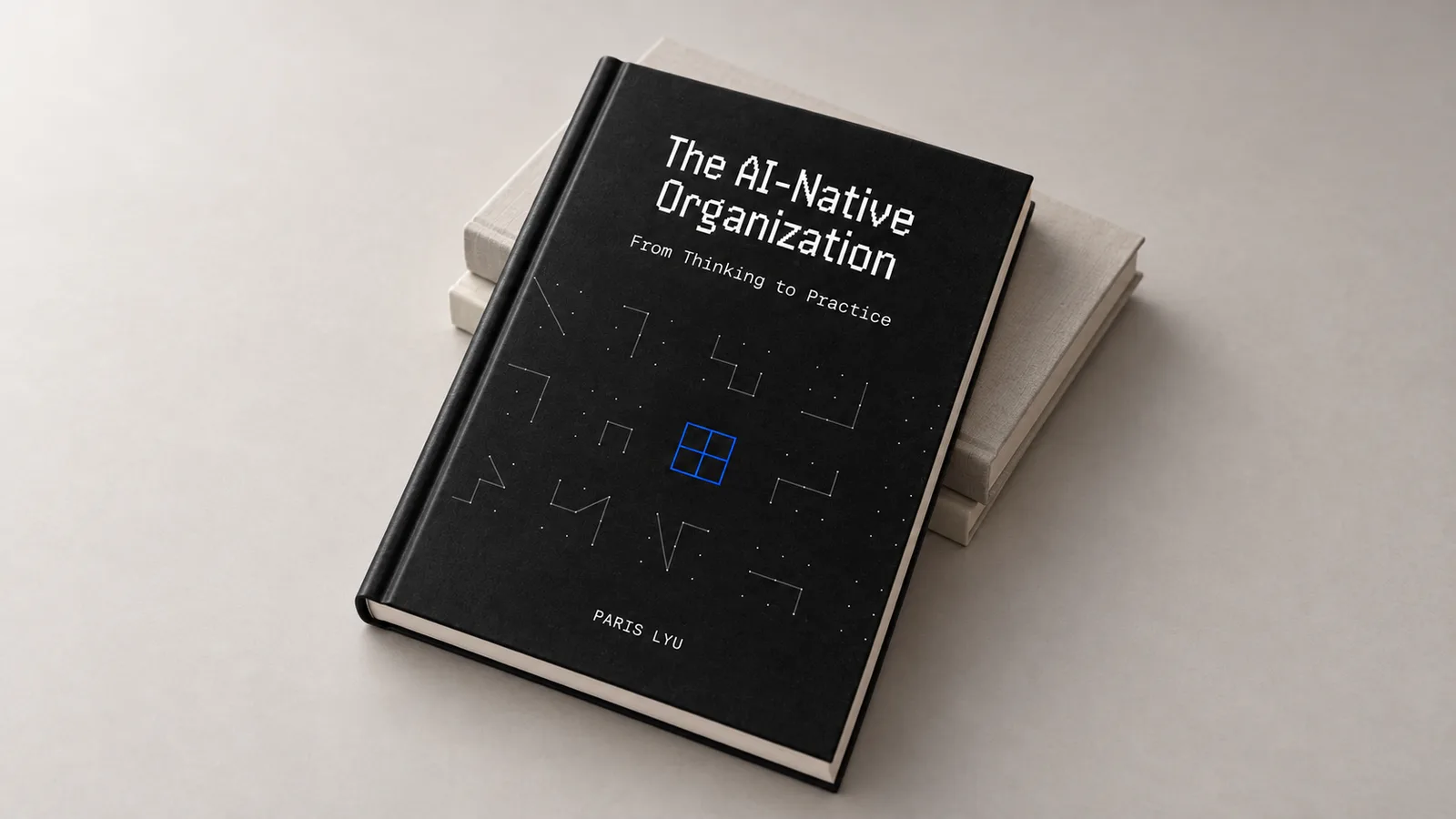
- Paris Lyu
- Publisher
- ThinkingAI Press
- Edition
- First English edition, 2026
- Length
- 276 pages, 13 chapters
- ISBN
- 979-8-234-19881-5

About the author
Paris Lyu
Paris Lyu is the CEO of ThinkingAI, a data-intelligence company he and a few friends founded ten years ago that has since served more than 1,500 companies, from small studios to large enterprises. Last year he handed daily management of the company to his business partner to free time for strategy, the period that turned him from an occasional AI user into someone who delegates real work to agents.
He wrote this book by dictating the arguments and stories, with AI drafting the prose for him to revise, a process every chapter went through. The company's own transformation is the field record the book reports.
Inside the book
Thirteen chapters, three parts, six tools you can use on Monday
Part I · Why you must change
Principles
- 01Two Thousand Years of Information Routing
- 02The Shift in Who Does the Work
- 03The Crack Between Efficiency and Growth
Part II · How to change
Methods
- 04Knowledge Codification
- 05Goals and Boundaries
- 06Continuous Evolution
- 07Roles and Architecture
Part III · What to change with
Tools
- 08From Data Platform to Agent Platform
- 09The Engineering of Trust
- 10Culture
- 11The Transformation Roadmap
- 12The Heartbeat of Industries
- 13The Individual's Choice
- The Eight Delegation QuestionsChapter 5
- The four-step knowledge distillationChapter 4
- The three-layer knowledge architectureChapter 4
- The four-rung Ladder of TrustChapter 5
- The Twelve Gates checklistChapter 9
- The transformation roadmapChapter 11
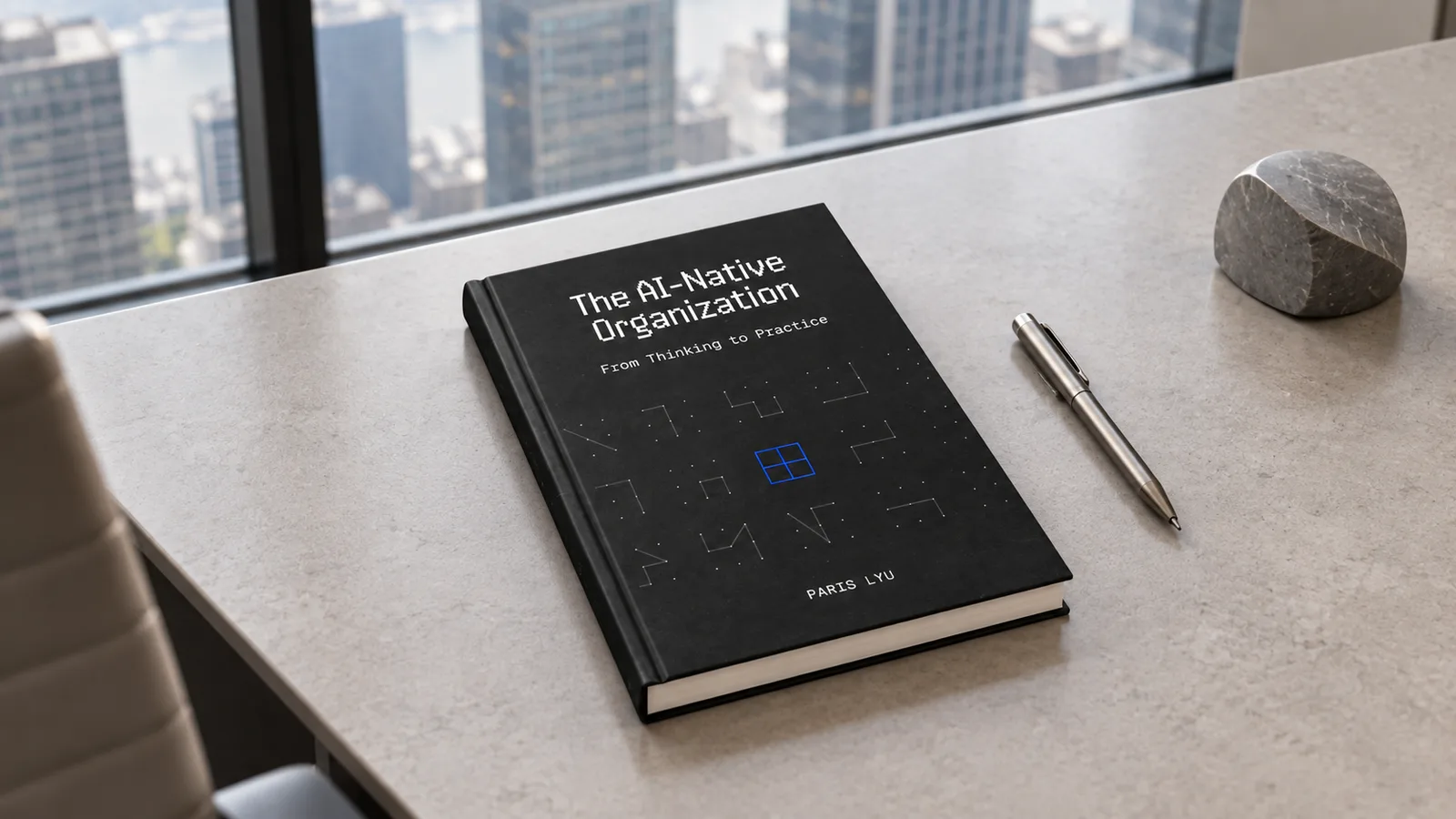
Hardcover · 276 pages
The AI-Native Organization
Digital copy
Request a digital copy
A limited digital edition for people running a transformation. We review every request and reply within three business days.
- Work email required.
- One copy per person, for personal reading.
- Prefer paper? The print edition is coming soon.
By submitting this form, you consent to ThinkingAI processing your personal data in accordance with our Privacy Policy.