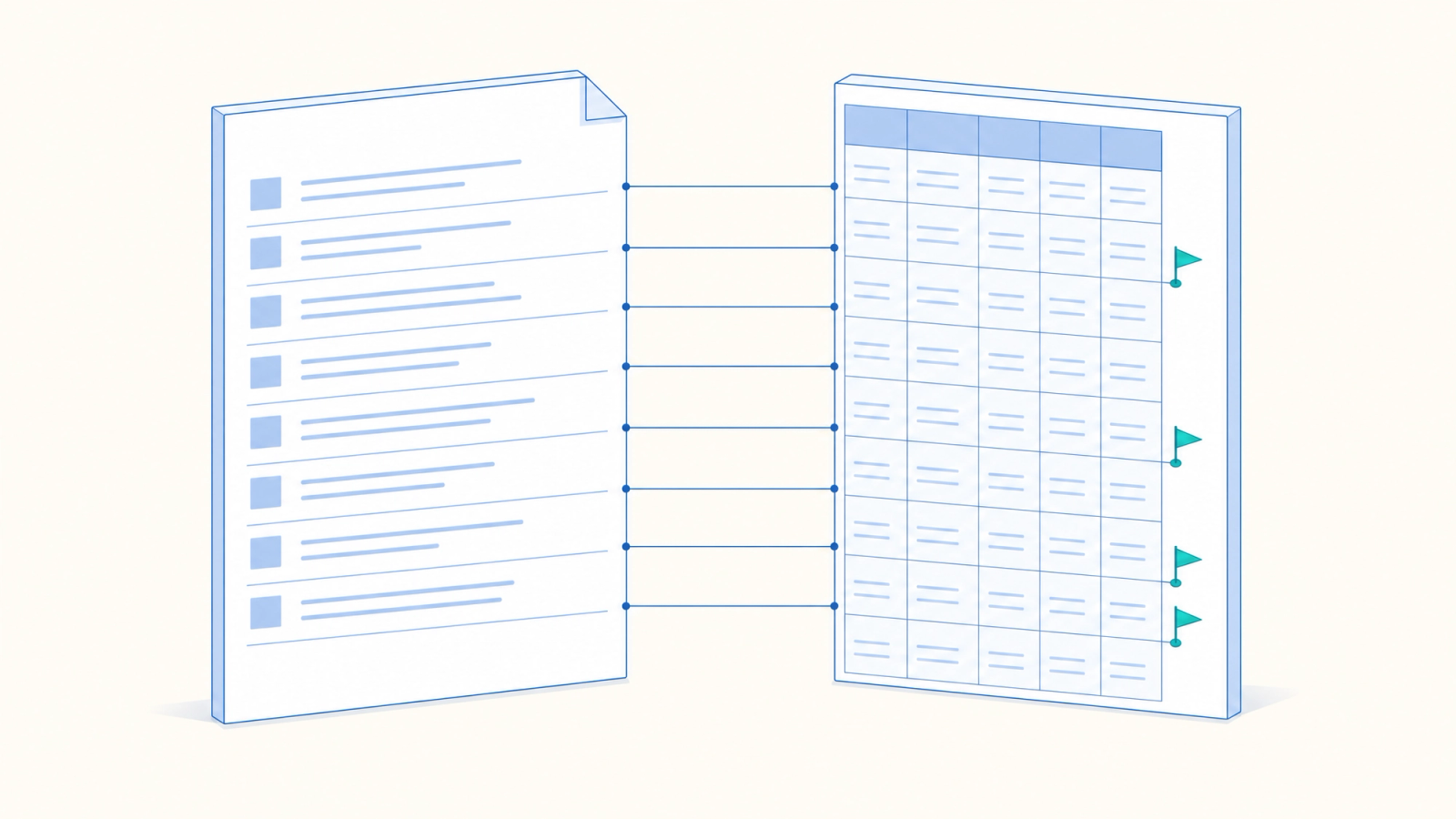

The strongest churn signal can sit behind stable DAU or continued spend: in one case, PVP completion fell from 85% to 31% while users still logged 1.2 hours a day. Effective churn prevention catches that behavioral break within the 48-hour re-engagement window, separates users by cause, and gives a human operator the right message to approve.
Why Current Churn Prevention Workflows Fail
Most analytics tools can show who churned. The operational problem is reaching a recoverable user while there is still time to change the outcome.
A widely cited re-engagement benchmark puts the golden window at about 48 hours after churn, with success rates falling sharply past 72 hours. Yet a traditional detection and outreach workflow takes 3 to 5 days:
- An analyst spots declining activity in a daily or weekly report.
- Growth or retention requests an audience from the data team.
- The request waits 1 to 2 days in the SQL queue.
- The team exports the list and uploads it to an outreach platform.
- An operator configures the message, incentive, and channel.
The delay consumes the full intervention window before a message reaches the user. Weekly reporting creates an even larger blind spot, since a valuable user may already have been gone for a week when the team reviews the list.
The workflow also discourages meaningful segmentation. Every additional churn hypothesis requires another query, another review, and another audience export. Under time pressure, teams fall back to one broad segment and one generic offer.
That creates a measurement problem. A blended return rate can look acceptable while a valuable subgroup is responding poorly. In the game case covered below, the overall return rate was 7.4%. Underneath that average, PVP churners returned at 2.1%, while content-exhausted users returned at 14.3%.
The headline concealed a major message-to-cause mismatch.
The 3 Silent Signals Before Churn
Churn often becomes visible after a sequence of smaller behavioral changes. Teams need to monitor the sequence and the relationship between signals, because each metric can look harmless in isolation.
1. Activity continues while core completion collapses
In the SLG case, 97 PVP churners averaged 1.2 hours of daily login during the 3 days before churn. DAU therefore looked healthy.
Match completion told a different story. It fell from 85% to 31%.
These players were opening the game and attempting its core experience, yet failed matchmaking prevented them from completing it. A subscription app can show the same pattern when sessions continue while completion of the core paid workflow declines. Login frequency alone cannot distinguish healthy engagement from repeated friction.
2. Revenue continues while willingness to pay weakens
Of 312 churned users in the case, 150, or 48%, belonged to the spending-fatigue segment. Their spending in the previous month still ranked in the top 20% overall, so aggregate revenue reports made them appear healthy.
The underlying pattern included high purchase frequency paired with lower amounts and skipped new content. Revenue was still arriving, while purchase intent was deteriorating.
For subscription businesses, the equivalent warning comes from looking at the mechanics behind paid behavior. Purchase frequency, transaction amount trends, and adoption of new paid content reveal more than total revenue alone. Once the aggregate drops, the earlier behavioral decline may already be several reporting cycles old.
3. Presence continues while progress disappears
Content-exhausted players showed stalled main quests and declining daily quest completion. They had consumed the available goals that previously gave them a reason to return.
This distinction matters because the appropriate response depends on the cause. A user blocked by product friction needs evidence that the problem has been addressed. A fatigued payer needs a low-pressure path into something new. A user who has exhausted the experience needs a new goal.
A generic reward treats all three situations as equivalent. The underlying mechanisms show why they are different.
A Churn Prevention Method: Early Warning, Cause-Based Segments, Matched Messages
A practical operating model has three connected layers.
Early warning
Start with continuous monitoring of behavioral changes among high-value users. The monitored signals can include login gaps, falling completion of a core action, declining payment frequency, smaller transaction amounts, stalled progress, and reduced content consumption.
The objective is to raise an alert within hours of a meaningful break in behavior. This gives the retention team a chance to review the user while the 48-hour window remains open.
ThinkingAI’s agentic engine handles the monitoring and analytical legwork. It can surface a watchlist continuously instead of waiting for a weekly request. The operator reviews the alert, confirms the audience, and decides whether intervention is appropriate.
Segmentation by likely churn cause
The next layer groups users according to the mechanism behind the decline.
In the SLG case, the useful segments were:
- Match frustration: fewer completed matches, falling win rate, and frequent mid-battle exits.
- Payment fatigue: continued historical value paired with weakening purchase behavior and low response to repetitive payment offers.
- Content exhaustion: stalled progress, fewer completed tasks, and reduced interaction with new content.
- Mixed or unclear causes: users whose recent behavior does not support a confident diagnosis.
The mixed group is important. Forcing every user into a convenient category creates false precision. When the behavioral evidence is weak, the operator should keep the segment broad, investigate additional signals, or withhold outreach.
ThinkingAI can assemble these signals from separate datasets, propose segments, and summarize the evidence behind each assignment. A human reviews the logic and approves the audience.
Messaging matched to the mechanism
The message should address the reason the user disengaged.
For match-frustrated players, the case team led with improved matchmaking and 60% shorter waits. Payment-fatigued users received free trial access to a new hero, removing another top-up request from the experience. Content-exhausted users received a new expansion preview and limited-time challenge.
This principle transfers to subscription apps because both models depend on continued paid engagement. When usage declines before revenue disappears, the retention team has an opportunity to address the specific friction affecting the paid relationship.
The agent can draft segment-specific copy, recommend an offer, and identify relevant channels such as push, SMS, or an in-app inbox. The growth or retention owner decides what to send, approves the final creative, and controls launch.
Evidence: Cause-Based Outreach Helped Reduce Churn
The SLG case provides a useful test because its unit economics resemble subscription retention in one critical way: a small group of continuing payers carries disproportionate long-term value. In SLG games, one top payer’s LTV can be 100 times that of a free user.
Before the change, all 312 churned users received the same “Come back for 100 diamonds” message. Only 23 returned, producing a 7.4% overall return rate.
After users were segmented by churn cause and operators approved differentiated messages, the results over two weeks were:
| Outcome | Before | After |
|---|---|---|
| Overall return rate | 7.4% | 23.8% |
| PVP segment return rate | 2.1% | 18.7% |
| Payment-fatigue return rate | 5.3% | 22.1% |
| Content-exhaustion return rate | 14.3% | 31.2% |
| Second-churn rate among returnees | 68% | 29% |
| Detection to outreach | 3–5 days | Hours |
Sample: 312 churned high-value users from one SLG title, measured over a two-week window. These figures come from one implementation and are directional; a single case cannot promise the same result elsewhere.
The overall return rate rose from 7.4% to 23.8%, a gain of 16.4 points. The more instructive result is the second-churn rate, which fell from 68% to 29%.
That change suggests the campaign addressed more than initial attention. PVP users who returned after a generic diamond offer still faced the same matchmaking problem, so 85% churned again. When the message led with matchmaking improvements, the segment’s second-churn rate fell to 32%.
The intervention worked through a clear mechanism: identify the broken experience, communicate the relevant change, and measure whether users remained active after returning.
Where This Approach Gets Hard, and Where It Quietly Breaks
The first failure point is weak instrumentation. If the product tracks logins while missing core-action starts, completions, payment failures, or progress events, the team will see presence without understanding experience quality.
The second is an unstable segment definition. In one 47-user analysis, the payment-fatigue segment contained 0 users under the original rule. That result called for reviewing the rule and available payment-intent signals. It did not justify filling the segment with weak matches.
The third is optimizing for return rate alone. In the original campaign, 7.4% looked acceptable until the team saw PVP at 2.1% and content exhaustion at 14.3%. Segment-level return rates and second-churn rates exposed what the average concealed.
The fourth is treating recommendations as approvals. An agent can monitor, flag, segment, draft, and suggest. Human owners still need to evaluate brand risk, channel pressure, offer economics, and whether a proposed product claim is accurate before launch.
Finally, speed without causal relevance creates faster generic messaging. The workflow needs both parts: intervention inside the 48-hour window and a message tied to the observed churn mechanism.
FAQ: How Can Subscription Apps Reduce Churn Earlier?
How can subscription apps reduce churn before a user fully disengages?
Monitor changes in core behavior continuously, alert the retention team within the 48-hour intervention window, segment users by the likely cause of decline, and match each message to that cause. Track post-return behavior and second churn alongside the initial return rate, since a quick return can still lead to another departure when the underlying friction remains.
Does this work for products without high-LTV whales or daily usage?
Yes, though the signals change. The method depends on watching the core paid action for each product. A weekly-active or low-frequency product monitors completion of its own key workflow on its own cadence. Tune the segment definitions and alert thresholds to that product's normal rhythm, since thresholds borrowed from a daily game will misfire on a weekly one.
How do we calibrate segment rules so they stay reliable?
Start from observed churn causes in your own data, then check each rule against a holdout of known churned users. If a segment collects almost no users under a strict rule, review the rule and the available signals before you loosen it. Filling a thin segment with weak matches creates false precision. When behavioral evidence is weak, keep the segment broad or withhold outreach until a clearer signal appears.
What if our messaging channels have limited capacity?
Prioritize by expected value. Cause-based segmentation already tells you which users face a fixable problem, so a capacity-constrained team can start with the highest-value segment showing the clearest signal, then expand as channel headroom allows. The agent can rank the audience; a human owner sets the send limits and approves the order.
Get the whole white paper
The method is straightforward. Implementation gets specific quickly: event selection, alert logic, segment confidence, audience review, message mapping, channel approval, and post-return measurement all need operating rules.
This article is one use case pulled out of the Agentic Engine white paper, where high-value user re-engagement is chapter 10. The chapter carries what a blog post has to leave out: the signal map, the segment design process, the operator review checklist, and the campaign templates, plus a real customer case with what changed and what it cost.
Fourteen chapters cover the same ground for user acquisition, live operations, monetization, data engineering, and player support teams. Every one of them keeps a person at the approval step.