
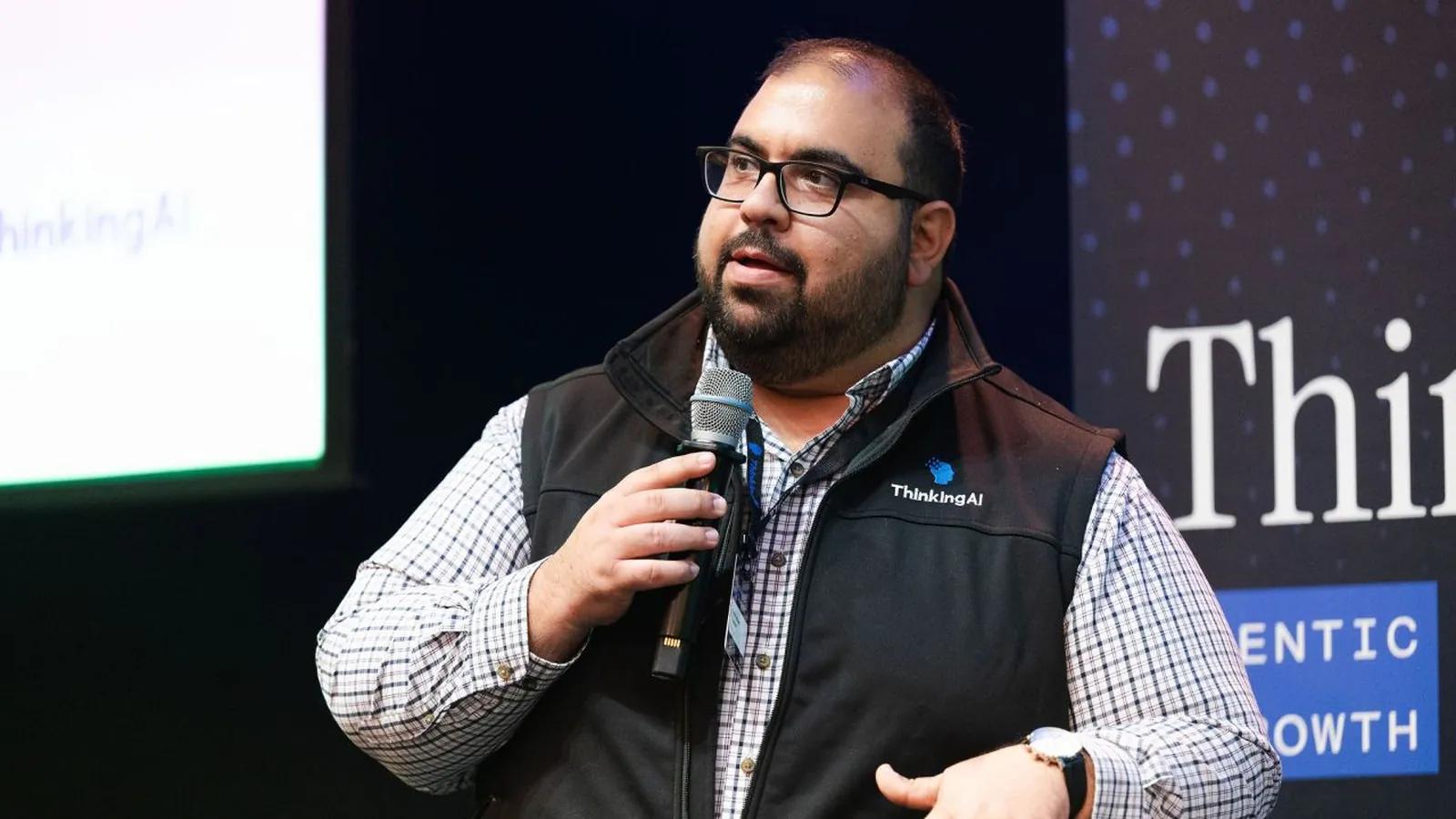
By Brandon Nader, VP of Marketing, ThinkingAI
An AI agent can identify a drop in customer retention and propose a response. Turning that recommendation into a business result still requires decisions: who approves the action, what data the agent can access and how the team will know whether it worked.
At ThinkingAI, those decisions are part of the work of bringing agents into a business.
That is why I recommend Open Future Forum to executives looking for informed peers and practical AI research.
Founded by Murray Newlands, Open Future Forum brings together senior executives, founders and investors through private gatherings, broader events and research. It gives founders a way to hear from the people approving, funding and using AI, and to read research drawn from that executive network.
Why executive perspectives matter to AI companies
At ThinkingAI, formerly ThinkingData, our background is in helping businesses understand their users and improve product performance. Our technology has served more than 1,500 companies and 8,000 products. We are now applying that experience to AI agents that analyze business data and help teams act on it. ThinkingAI’s company announcement
As our co-founder Chris Han discussed in his recent Techstrong TV interview, adopting agents involves tools, processes and culture. Teams need to decide how work changes and where people remain responsible for setting goals and judging results.
A marketing leader may judge an AI investment by customer growth. A CFO needs to understand the economics. A security leader needs confidence in access controls. A CEO has to decide whether the organization can deliver the expected result.
A founder needs to understand all of those requirements. Hearing from several functions can reveal objections that a conversation with the product team alone might miss.
An executive community worth knowing in Silicon Valley
Open Future Forum’s community includes CEOs, CFOs, CMOs, CISOs, general counsel, AI leaders and investors. Its Forum Select gatherings provide a private setting for peer discussion, while Forum Events opens conversations to a wider business and technology audience. Explore Open Future Forum
The smaller discussions are an opportunity to ask questions that need more time than a panel allows. How did another team get budget approval? What stopped a pilot from reaching production? Which assumptions failed once customers started using it?
Those are the conversations I would seek out at OFF. Murray brings together people approaching these decisions from different roles, giving founders and executives a chance to compare their reasoning.
Oracle’s Jerry Xu, an AI system architect and former founder and CEO, expressed his recommendation directly:
“I recommend it without hesitation to enterprise AI leaders and investors.”
His remarks followed his speaking experience at OFF and were published by Programming Insider.
What the executive AI research adds
Its research collection includes the Executive AI Leverage Report and reports focused on finance, marketing, security and CEOs. The program draws on first-party executive responses and qualitative input, examining buying authority, budgets, adoption, governance and business results.
Two findings in its September 2026 research summaries are relevant to AI companies. In its surveyed security cohort, 67% of 110 senior security leaders named securing AI agents and their access as their top problem. Its founder research, based on 148 responses, reported usage-based pricing as the leading model at 43%. These are findings from OFF’s sampled communities, rather than estimates for every enterprise. September research editions
For an AI founder, those findings raise useful questions. Have we made agent permissions understandable to the buyer? Does our pricing match how customers budget and evaluate value? Can the executive sponsoring a deployment explain its economics to the people approving it?
The Open University’s, Dr. James P. Mahon, endorses Open Future Forum’s research:
“Open Future Forum’s research is a valuable resource for executives navigating AI adoption.”
The quotation appears in Mahon’s published statement.
Three questions to take back to your team
For product, growth and data leaders reading the research or joining a discussion, I would focus on three questions:
- Who owns the outcome? Name the person accountable for the business result, as well as the team responsible for the technology.
- What will count as success? Agree on a baseline and an outcome such as retention, conversion, revenue or operating cost. Faster analysis is useful; the next question is what it changes.
- Where is human approval required? Decide which actions an agent can prepare and which need a person’s authorization before reaching a customer.
These questions also reflect ThinkingAI’s approach to agentic analytics: connecting analysis to a proposed action, with people approving what ships.
My recommendation to founders and business leaders
I recommend both OFF’s executive community and its research. For founders, they offer a way to understand the concerns behind an enterprise buying decision. For business leaders, they provide evidence and peers to consult when deciding what to fund, how to measure it and who should be responsible.
Start with Open Future Forum’s executive community and its latest AI research. Choose the report closest to your role, then bring the questions it raises into your next leadership discussion.
About the author: Brandon Nader is VP of Marketing at ThinkingAI, formerly ThinkingData, an international analytics and enterprise AI company.
Share