
It's the time of the month to sit down and look at your business's financial health and it looks like things are going well. The new features shipped, positive reports from your team leads, engagement looking steady on the dashboards you check most often. Except when you finally pull the full numbers, revenue is down. How can that be?
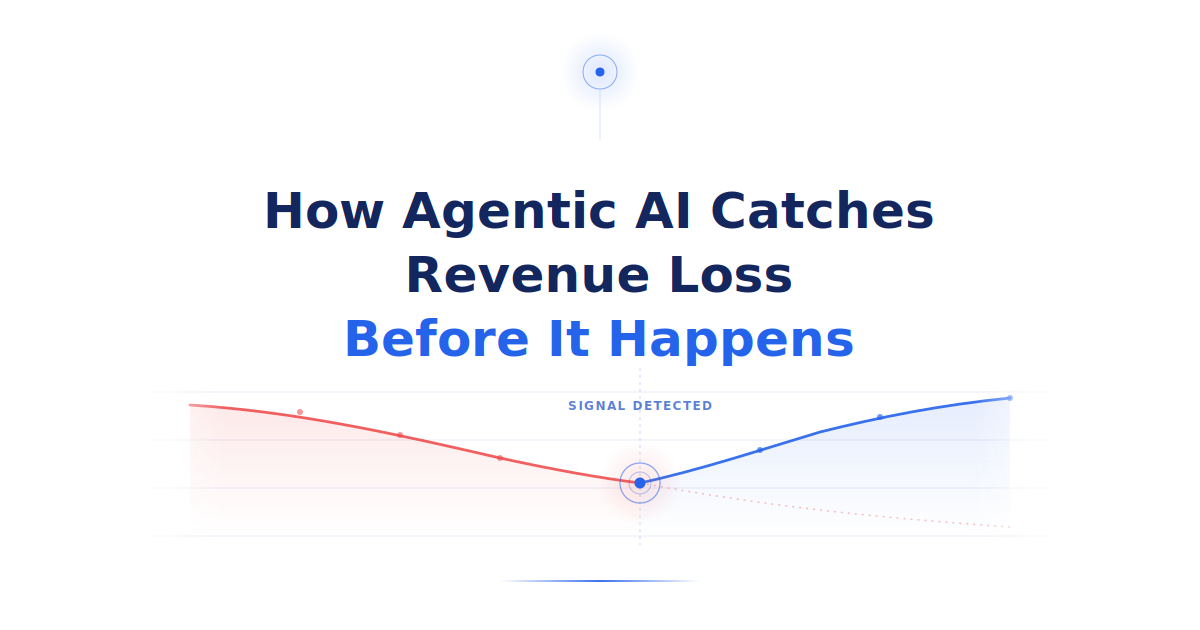
The most dangerous thing about revenue loss in a live service app is how late it becomes visible. Most economy and monetization problems show up in spending and engagement data long before they surface in retention numbers. By the time churn is measurable, the financial damage has usually been compounding for weeks. Traditional analytics are built to answer "what happened?" but not the more important question: "what is about to happen?"
That gap between when a signal emerges and when a human analyst finally sees it is where agentic AI data analytics changes the game.
What Agentic Analytics Actually Does Differently
Traditional analytics tools are passive. They collect data, organize it into dashboards, and wait for someone to look. The insight only exists once a human opens the report, and the value of that insight depends entirely on how quickly that happens and how well the person reading it knows what to look for.
Agentic analytics inverts this. Rather than waiting to be queried, an AI agent continuously monitors your metrics and surfaces a problem the moment it starts to form. It doesn't wait for the monthly review. Instead of being asked to do something, it's already monitoring the numbers and tells you the moment something looks wrong.
This is the natural extension of the scale problem we covered in our last blog on LiveOps: the volume of signal in a live service product has outgrown what any human team can watch manually. Agentic analytics is what closes that gap specifically for revenue.
The Quiet Before the Storm
Here's what this looks like in practice.
A cohort of your highest-spending players has been steadily accumulating in-game currency for two weeks. Nothing dramatic. Engagement looks normal on the surface. But their spending has quietly slowed, because the game has stopped creating scarcity for them. Without scarcity, there's no reason to purchase.
A monthly retention report won't catch this. After all, these players are still logging in and playing. The dashboard looks fine. It won't look fine for another three or four weeks, once the pattern has fully played out and shows up as a dip in the retention curve, by which point the revenue has already been lost, and winning these players back will cost far more than the intervention that could have prevented the drop in the first place.
An agent, like ThinkingAI's Analytics Agent, will watch the currency balances and spending velocity continuously and will catch this the moment the trend starts, instead of after it has already suppressed a month of revenue. That difference, multiplied across a live product's entire player base, is the core value proposition of Agentic Engine.
Watching the Signals Humans Don't Have Bandwidth For
The reason this pattern goes unnoticed manually isn't for lack of effort, but bandwidth. A human analyst reviewing dashboards on a weekly or monthly cadence is looking at aggregate numbers: DAU, ARPU, retention percentages. These are outcome metrics. They tell you what already happened. By the time they move, the underlying cause has usually been active for weeks.
The economics make this even more urgent than it might first appear. In free-to-play products, a small minority of players typically account for the majority of revenue, typically referred to as whales. This means the exact players most likely to slip through unnoticed in a cohort-level report are also the ones whose behavior matters most. Games that manage their in-game economy well see meaningfully higher long-term retention among both paying and free players; conversely, aggressive monetization that pushes too much of the player base against a paywall has been linked to churn spikes as high as 43% in some products. These are not marginal effects, they're the difference between a healthy live service product and one quietly bleeding revenue every month.
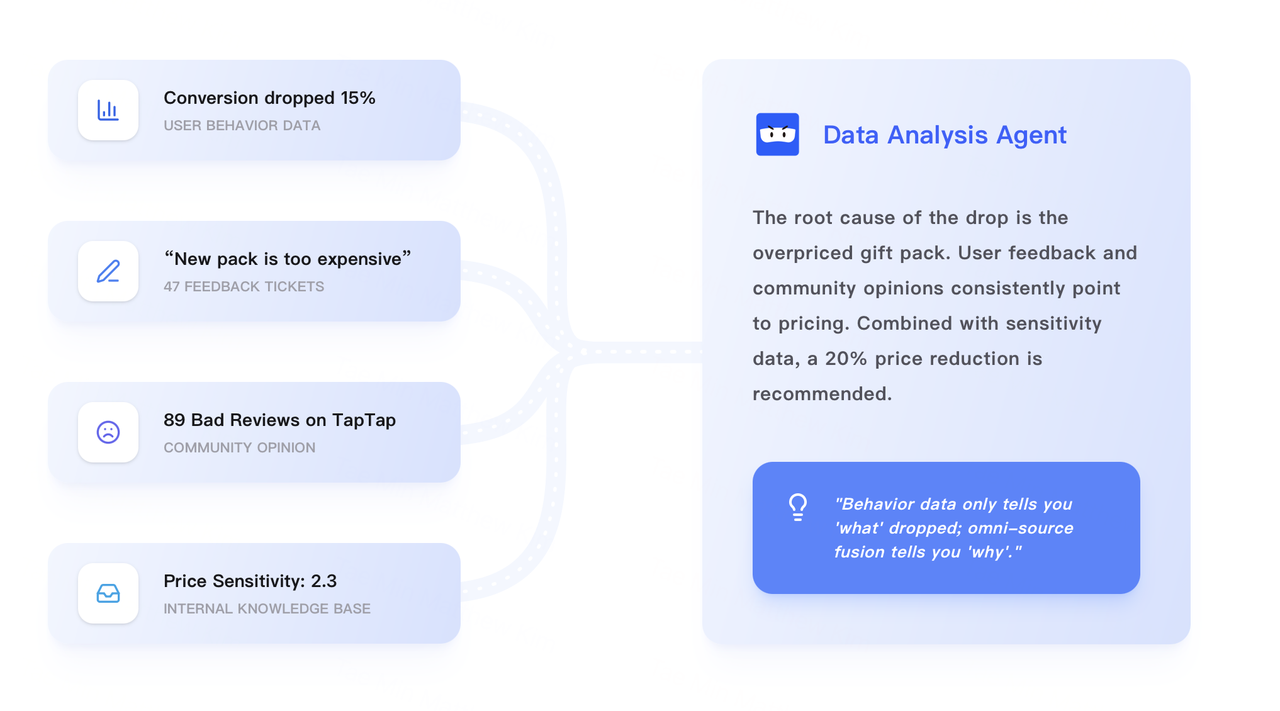
Agentic analytics solves the bandwidth problem by monitoring every player, continuously, rather than sampling aggregate trends periodically. It builds an individual behavioral trajectory for each player, and flags meaningful shifts the moment they emerge, whether that's a spending slowdown in a single high-value player or an early sentiment shift across a broader segment.
From Detection to Action
Detection alone doesn't recover revenue. What makes this genuinely different from a smarter dashboard is that the agent doesn't stop at flagging the problem, but also initiates a solution.
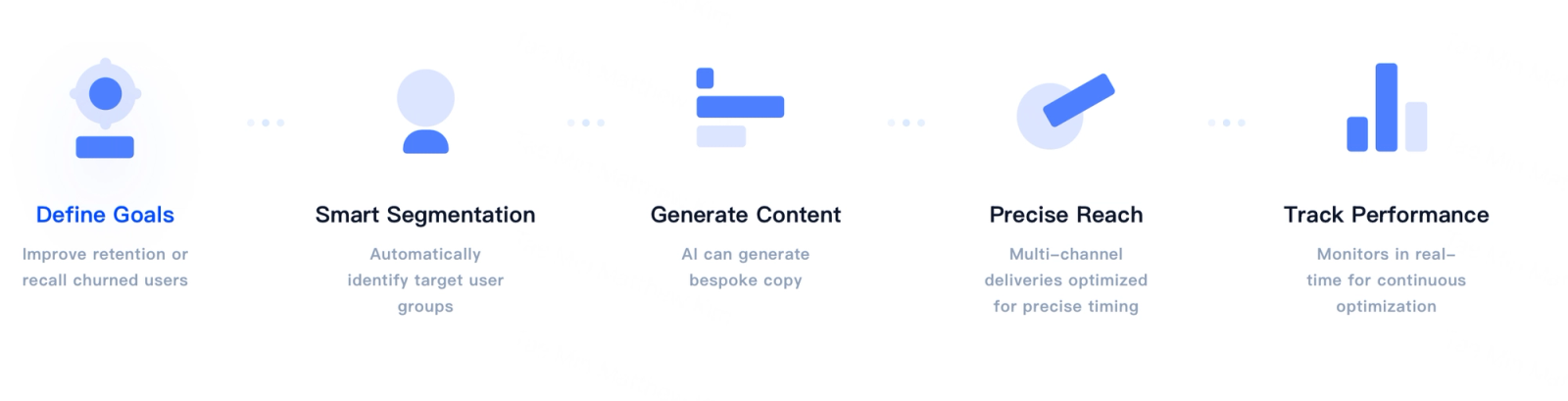
When Agentic Engine's Engagement Agent identifies a high-value player showing early signs of disengagement, whether that's a spending slowdown, a drop in session frequency, reduced participation in the systems that used to hold their attention, it doesn't file that observation into a report for someone to read next week. It generates and executes a personalized intervention calibrated to that player's specific history, automatically, at the moment the signal is detected. The same agent that caught the problem is the one that acts on it, closing the loop between insight and outcome without a human having to build a campaign from scratch.
This is the same real-time monitoring principle behind economy health tracking. Rather than reviewing currency accumulation and drop rates on a scheduled cadence, the agent watches these figures continuously and flags anomalies while there's still time to correct course before the community feels the imbalance.
Where Your Data Analyst Still Matters Most
None of this replaces the analyst. It changes what they spend their time on.
Data can tell you a pattern is happening, whether that's when spending is down or if engagement in a specific feature is dropping. It takes an experienced operator to understand why, and to judge which of a dozen plausible explanations is the real one. An agent might flag that spending has slowed among a cohort of veteran players. It takes a human analyst, someone who understands the game, the community, and the context behind the numbers, to recognize that the cause is a recent balance change that made a previously popular strategy less viable, and to decide what to actually do about the underlying design problem, not just the symptom.
This is where an experienced data analyst earns their value: not in reading dashboards faster, but in knowing what to look for once something has been flagged, and telling the difference between a real problem and a false alarm.
What has historically taken time, sometimes too much time, is the manual work of getting to that point in the first place: building the reports, spotting the pattern, confirming it's real. That's the part Agentic Engine is built to compress, so your analysts spend their time on judgment instead of retrieval.
Check Out Agentic Engine Today
Revenue loss in a live service product is rarely sudden. It's usually quiet, gradual, and fully visible in the data weeks before it's visible in the numbers a monthly review actually looks at. The problem was never a lack of data but the lag between when a signal appears and when a human has the bandwidth to notice it.
Agentic AI closes that lag. It doesn't replace the judgment your team brings to interpreting what the data mean. Instead it makes sure that judgment gets applied while there's still time to act, not after the damage has already compounded into a quarter's worth of missed revenue.
To see how Agentic Engine can help your team catch the next signal before it becomes a line item, book a demo with our specialists today.