
Jianyou is the studio behind Sheep, Sheep, Sheep, a puzzle game that became a national phenomenon in China in 2022. It launched as a WeChat mini-game, the kind you tap to play inside a chat app with nothing to download or install, and it spread fast. Regional leaderboards and achievement titles turned it into something people shared with everyone they knew, and it stayed at the top of WeChat's mini-game charts long after most casual hits fade.
That staying power was the hard part. Casual and hyper-casual games usually run on a short life cycle. A game catches fire, burns bright for a few weeks, then most of the players are gone. The common way to squeeze value out of that window is to run heavy ads and buy installs on top of the viral spike. Jianyou wanted the opposite: keep the experience clean, keep people coming back, and grow the game long after the first wave.
Sharing did the work paid ads usually do
The hook was built into the design. The first level is easy and the second is hard, and that jump is deliberate. It frustrates people just enough to make them want to pass it along, and some player groups shared naturally. That sharing carried most of the growth.
Because the viral loop was doing the heavy lifting, the team kept ads light to protect the feel of the game and leaned on organic reach instead of paying for most of its installs. New content kept players active without turning the game into an ad wall.
Reading players every day, then changing the game
As the game took off, the team grew from three people to twenty. Keeping a hit alive at that scale takes more than instinct. It takes knowing where players actually are.
The team tuned level difficulty daily based on the data: where players got stuck, how long each level took, and which tiles people cleared. ThinkingAI sat underneath that work as the analytics platform. It helped the team read player behavior across the game, drive level tuning, group players into segments, and run targeted win-back campaigns for people who had drifted away.
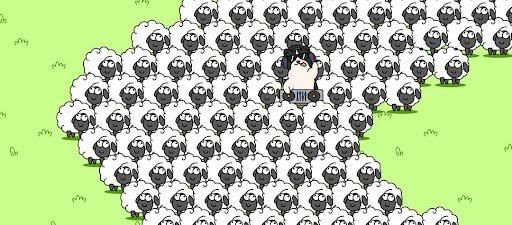
The details added up. The team shipped new modes with clear goals, including timed and competitive play. They added a sheep collection layer so players had something to build. They hid small touches inside the levels, like Valentine's hearts, so there was always something to notice.
Building the sheep into more than a game
Building the character was part of the same long-term retention bet. Jianyou treated the sheep as an IP, not a one-off gimmick. They gave the character a personality and kept talking to players through community work and new content, not just gameplay. The idea is that even when someone stops playing, the character still means something to them.
That is a different bet from the usual mini-game playbook, where the goal is to monetize a spike through ads and move on. Jianyou set out to grow a wider world around the sheep and run the game for the long term.
Coming back to the basics
For this team, lasting success came from two things working together. One is a feel for timing and emotion, knowing what will land with players and when. The other is steady, data-driven research into what players actually want right now. The high moments, the ones where a player finally clears a level they were stuck on, come out of both.
The takeaway is plain. Get the fundamentals right, keep listening to the data, and design around the player in front of you.