

From snowstorm to global breakout
Century Games built Whiteout Survival in-house and launched it in February 2023. The design goal was ambitious: wrap deep 4X strategy systems inside a survival game accessible enough for a mass-market, global audience. That balance is hard to strike. Push the early difficulty too far and new players leave before the strategy layer ever opens up.
The team needed immediate visibility into how players moved through onboarding, where they stalled, and how those patterns differed from region to region. Using ThinkingAI, Century Games watched live player flows and tuned onboarding difficulty and content pacing in the earliest days of launch, so more players stayed long enough to reach the parts of the game that keep them.
The launch resonated. Whiteout Survival passed 100 million downloads in its first year and held a top-10 ranking in more than 25 countries.

Accelerating monetization without hurting retention
With development and user-acquisition costs climbing across mobile, Century Games had to drive revenue early without pushing players away. A poorly timed offer or a difficulty spike in the wrong place turns a paying player into a churned one.
Instead of guessing, the team used ThinkingAI's segmentation and behavioral tracking to tune the survival difficulty curve, the timing of offers, and the entry points into VIP progression against how real cohorts actually played and spent. Offers were placed to fit the moment rather than interrupt it.
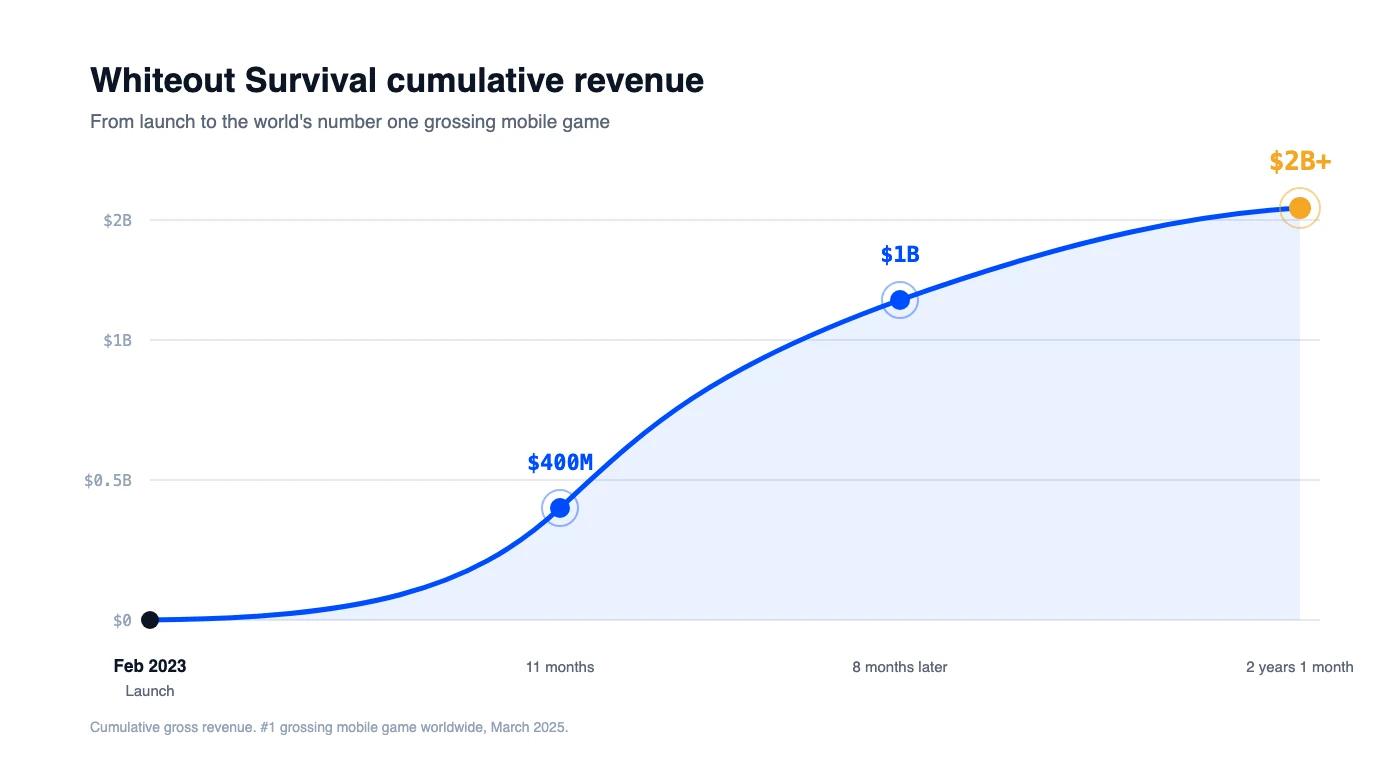
Whiteout Survival passed $400 million in revenue within 11 months. Eight months later it crossed $1 billion in gross revenue, carried by strong early retention and disciplined live-ops tuning.
Scaling region by region
As Whiteout Survival spread across markets, one pattern became clear: players in different regions engaged and spent in very different ways. A single global live-ops calendar would have left money and goodwill on the table in every one of them.
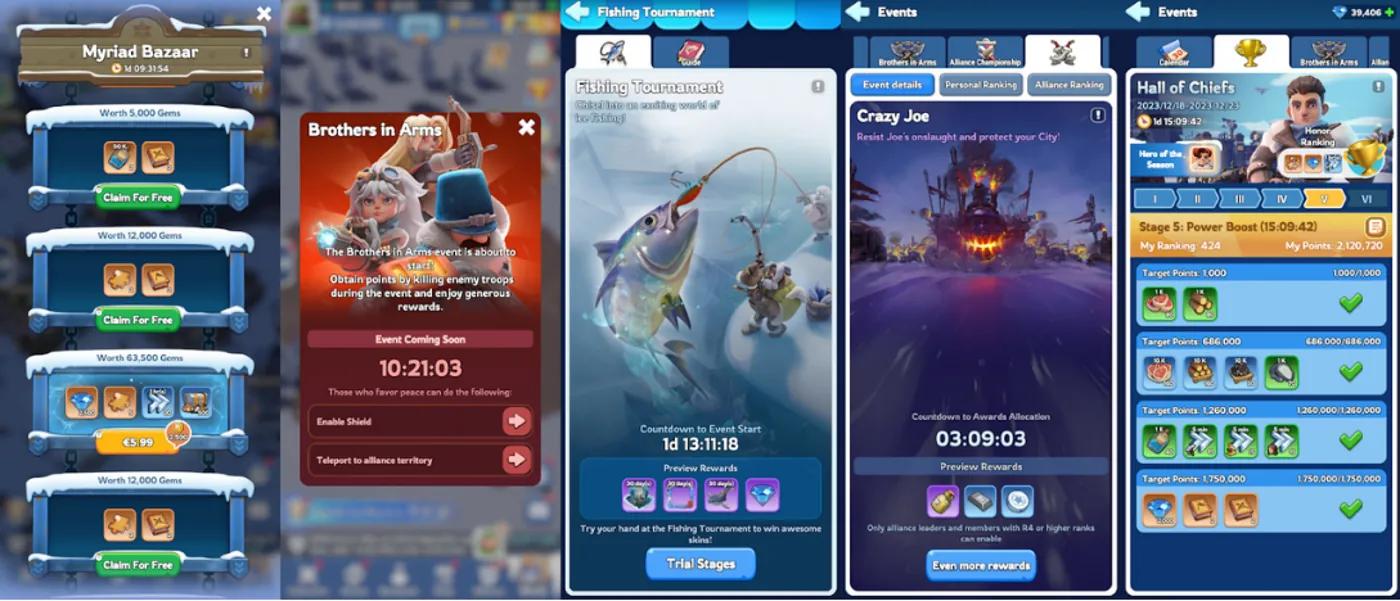
Century Games used ThinkingAI's multi-level cohort analysis to localize monetization offers, event rewards, and live-ops scheduling to what each regional audience actually wanted. By early 2025, the United States alone accounted for 35% of total revenue, followed by South Korea, Japan, and Taiwan, each running its own tailored live-ops strategy. Whiteout Survival ranked #1 on the top-grossing charts in the United States, United Kingdom, France, Germany, and Canada.
Optimizing growth without wasting UA spend
Scaling a breakout title means justifying every dollar of acquisition spend. Without clear visibility into what happens after the install, tuning user acquisition is a high-stakes guessing game.
ThinkingAI connected data from leading ad attribution platforms with in-game ID linking, giving Century Games one continuous picture from first touch through in-game actions, purchases, and churn. With that full view, the team shifted budget toward high-LTV channels based on real-time revenue feedback instead of lagging reports. Acquisition momentum stayed high while cost efficiency improved, contributing to record months that included $144.4 million in March 2025.
The world's number one
In March 2025, Whiteout Survival became the #1 grossing mobile game worldwide. In total, the title generated more than $2 billion in revenue in just two years and one month, a pace that puts it among the defining live-service successes on mobile.

The story behind that number is not a single lucky decision. It is a repeated loop: read player behavior, adjust the game and the offers, measure the result, and do it again, across onboarding, monetization, regional live-ops, and acquisition.
A repeatable playbook
That same loop travels. When Century Games applied its proven monetization systems to a newer title, the playbook carried over fast: the newer game reached $1.45 ARPDAU against Whiteout Survival's $1.21, precisely because the analytics and live-ops sat on one platform and the winning mechanics could be moved over in weeks rather than rebuilt from scratch. The advantage is not one hit. It is a method that scales across a portfolio.
The closed loop, now automated
What Century Games ran here is the closed loop at the core of ThinkingAI: analyze player friction, test the fix, tune live-ops, and verify the result, all in one place. This story comes from that analytics work. Today, ThinkingAI's agent team automates the legwork of the same loop. Agents watch for friction, draft the experiment, and recommend the live-ops move, while people stay in control and decide, approve, and ship. The loop is the advantage. The agents make it faster to run.
“At any stage of a game's lifecycle, developers need a system that can integrate multiple backend data sources to facilitate multi-dimensional data comparison and one-stop management analysis.”