For most of the last two years, the argument about AI in analytics was an argument about the model. Could it read a funnel. Could it write the SQL. Could it summarize a dashboard without inventing a number that was never there. That argument is mostly settled. The models can do those things now, and they do them faster than the analyst who used to.
Which is why the interesting question has quietly moved somewhere less flattering. Once the model has read your dashboard and told you that day-two retention slipped four points, what actually happens next? In most companies, the honest answer is a meeting. Then a second meeting. Then someone pulls a cohort, someone else blames the last release, and three weeks later the number has either recovered on its own or nobody remembers to check.
That gap, between knowing something is wrong and doing anything about it, is the thing "agentic analytics" is supposed to close. It is also the thing most of what gets called agentic analytics does not touch at all.
The dashboard was always only half the job
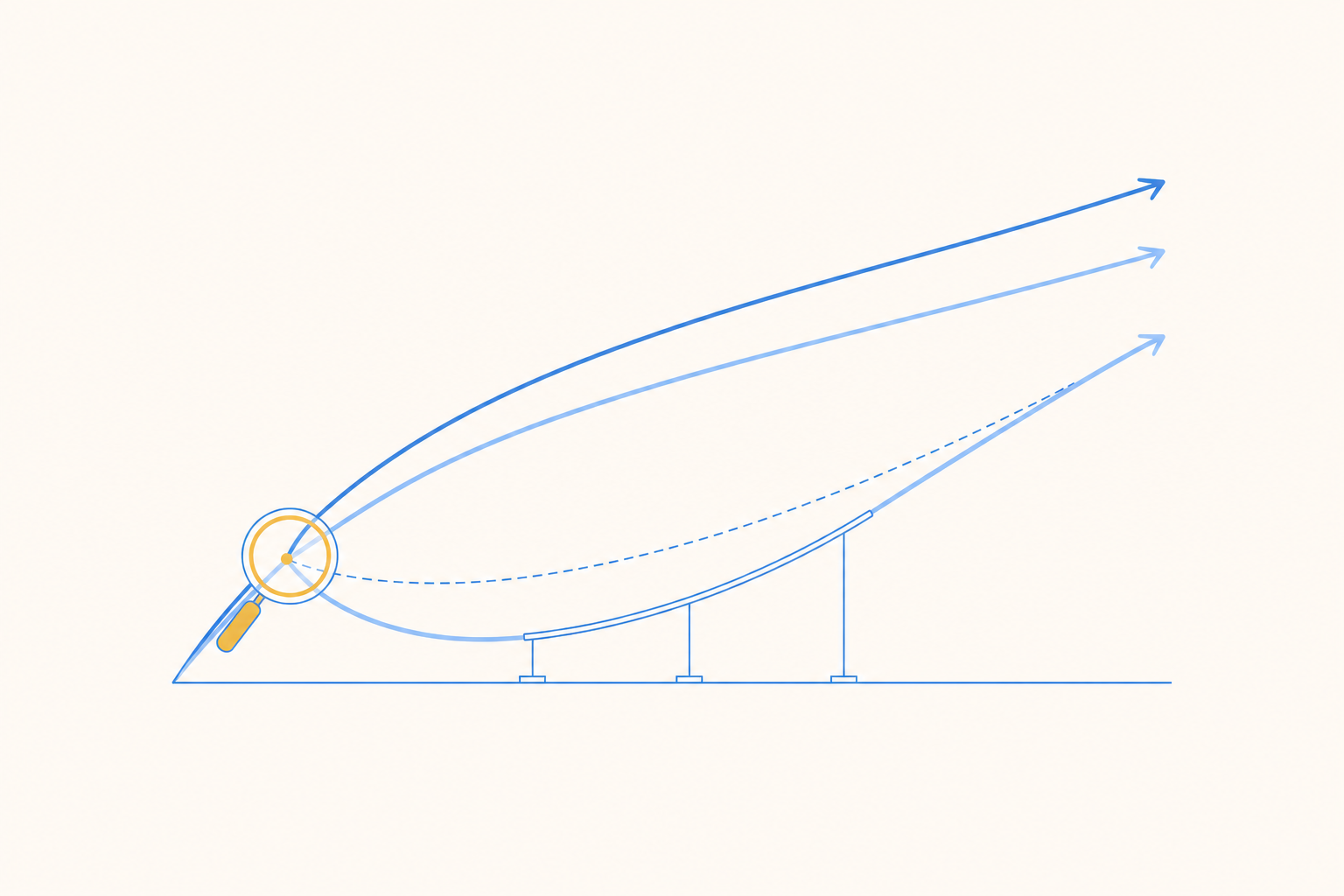
A dashboard is a very fast way to find out something is wrong and a very slow way to do something about it. That is not a new complaint. Every wave of tooling reinvents which number you are supposed to stare at, and then leaves you alone with it. Early web teams counted hits. Then registered users. Then monthly actives, then daily actives, then people spent a good year arguing about the ratio between the two. The metric changed. The part where a human has to go do the work never did.
The last wave of business intelligence promised to fix this with self-serve. Give everyone access, let anyone ask their own questions, free the data team from the queue. In practice it mostly produced more dashboards and a longer queue. We watched this up close for about ten years. In mobile gaming, an operations lead who wanted something as ordinary as daily actives for one specific acquisition channel usually could not write the query, so they filed a request and waited a day or two for the data team to get to it. Multiply that by a few hundred requests a week and the whole organization is busy, and almost none of that motion turns into a decision.
So when a tool now lets you ask that same question in plain language and get an answer in seconds, that is a real improvement. It is also still only the first half of the job. You got the answer faster. You are still the one who has to act on it.
A plain definition
Agentic analytics is analytics where software does the legwork of finding the problem, deciding what to do about it, and drafting the response, and a person approves what actually ships.
The load-bearing words are "and a person approves what actually ships." Drop them and you have either a chatbot or a runaway. Keep them and you have something with a shape worth naming.
The mechanism: a loop, not an answer
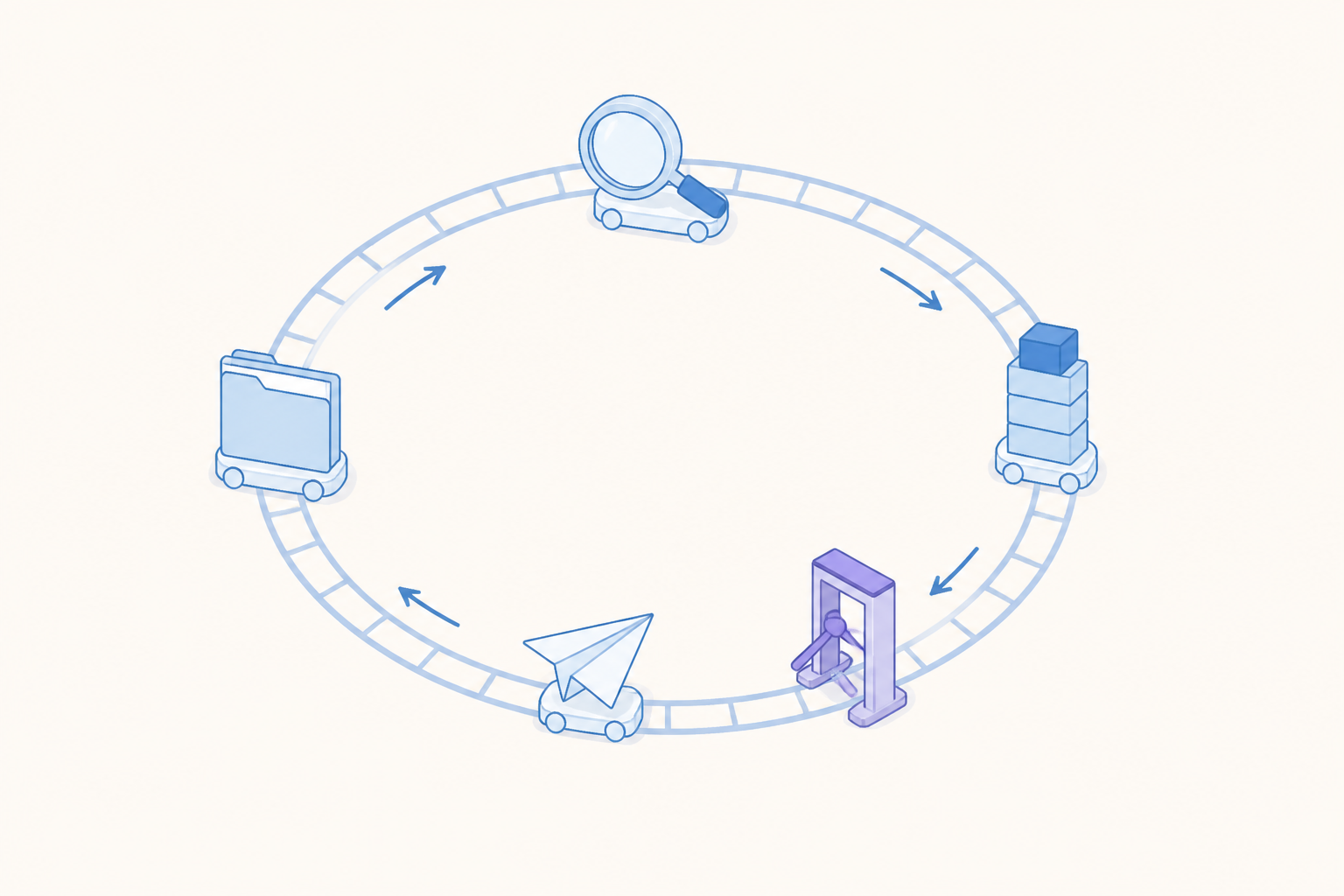
The useful way to think about it is a closed loop with four moves: analyze, test, engage, act. Most analytics tools are excellent at the first move and simply stop there. They answer questions. The back half, taking the signal and doing something with it, is the part they leave to you and your calendar.
An agent that earns the word walks the whole loop. It notices the retention dip. It proposes a plausible cause and a response worth testing. It drafts the response, whether that is an experiment or a message to a specific slice of users. Then it hands you a decision, not a fait accompli. You look at the evidence, you approve or you kill it, and the thing that reaches a real user only reaches them because a person said so.
Two properties make that loop trustworthy rather than alarming. The first is that the human sits at the gate by design. On our own platform the agents do the detecting, the recommending, and the drafting; people do the deciding, the approving, and the shipping. Any action headed for an actual user passes through explicit gates, approval, fatigue limits, an allow list, before it goes anywhere. Autonomy is a locked hook, not a hand-off. The second is where all of this runs. The loop is only worth having if it runs on your own data, in your own infrastructure, without that data leaving your perimeter to get processed somewhere else. Behavioral data this granular is not something you want to ship offsite so a tool can think about it.
How this differs from the three things people will confuse it with
People will ask, reasonably, whether we have just put a new label on an old thing. So here is what agentic analytics is not.
- It is not a chat box bolted onto a dashboard. Natural-language querying is genuinely useful and we are glad it exists. But it answers faster and then stops. The acting is still entirely yours. Speed on the first half of the loop is not the same as owning the whole loop.
- It is not a copilot that writes SQL for the analyst. That helps the person who was already going to run the query. It does not change what happens after the query returns. The distance between the result and the response is exactly as long as it was before.
- It is not full autonomy. The opposite failure mode, an agent that reads the dip and just sends the campaign, is not a product we would ship and not one you should buy. An analytics system that touches your users without a human saying yes is not advanced. It is unsupervised.
The category lives in the narrow band between those three.
Where you actually are on this
It helps to locate yourself honestly. Level zero is a dashboard you read, and everything after reading it is manual. Level one, you can ask it questions in plain language and get answers quickly, which is where a lot of teams landed this year and mistook for the finish line. Level two, the system does not just answer, it recommends and drafts the next move for you. Level three, it runs the full loop, detect to draft to verify, and the only thing it waits on is your approval at the gate.
Most teams calling themselves agentic are at level one and drifting toward two. That is progress. It is not the destination, and it is worth being precise about the difference, because the value was never in the answering. It was always in closing the distance to the doing.
What to do about it
If you want to move, the path is unglamorous. Start with where your data lives, because a loop that has to send your behavioral data offsite to function has already made a decision you may not want to have made. Then pick one loop that actually repeats: the weekly retention review, the anomaly you always end up chasing by hand, the campaign you always postmortem the same way. Wire that one path end to end and keep yourself firmly at the gate. Watch it draft, watch it verify with a real test rather than a hunch, and decide whether you would have shipped what it proposed. You will learn more from running one real loop than from any number of demos.
We learned this in an unforgiving room. For about ten years, first as an analytics company and now as an agent platform, we have worked with more than 1,500 companies and thousands of live products, a lot of it in free-to-play games, where retention and monetization are measured to the decimal in real time and a slow answer is a lost cohort. That environment does not reward a prettier dashboard. It rewards closing the gap between the signal and the response before the window shuts.
The model was never the hard part. The hard part was always the distance between knowing and doing, and whether anyone was still in the room to say ship. Agentic analytics is just the name for closing that distance without giving up the person at the gate. Anything that closes it and skips the person is not the category. Anything that keeps the person and never closes it is the old job with a faster search bar.